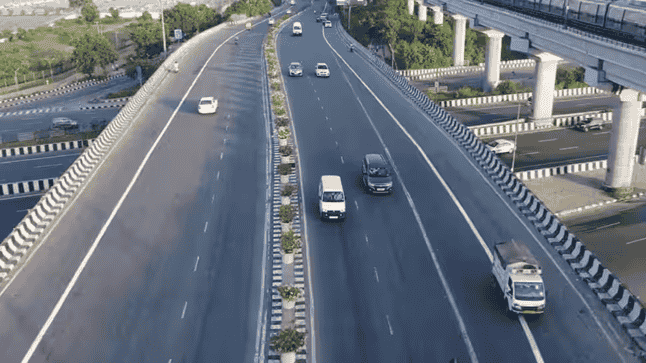


NHAI Fast-Tracks April Opening for ₹11,970 Cr Project
The National Highways Authority of India (NHAI) is finalizing preparations to open four critical packages of the Delhi-Dehradun Expressway. It stems from the Eastern Peripheral Expressway (EPE) near Khekra and ends on the Saharanpur bypass. For inauguration, Its sections are slated in the first week of April 2026. This development marks a significant milestone for the Bharatmala Pariyojana project, which was approved in 2020 to overhaul connectivity.
Drastic Reduction in Travel Time and Distance
The 212-km expressway is designed to transform regional mobility by bypassing heavily congested urban centers.
- Time Efficiency: Travel time between Delhi (Akshardham) and Dehradun is expected to drop from 4–5 hours to just over 2 hours.
- Distance Shortening: The route reduces the total distance by 23 km, down from the existing 235 km via traditional highways.
- Operational Readiness: The initial stage trial runs have been underway since January, from Akshardham to the UP border and Loni to Khekra.
Engineering Highlights and Wildlife Protection
The project is a sophisticated mix of greenfield and brownfield developments, notable for its environmental considerations in ecologically sensitive zones.
- Eco-Friendly Infrastructure: A 20-km stretch passes through the Rajaji National Park, featuring Asia’s longest elevated wildlife corridor (12 km) allowing uninterrupted animal movement.
- Infrastructure Specifications: The corridor includes the 340-meter Daat Kali tunnel near Dehradun and six-lane configurations designed for max. 100 kmph for cars.
- Route Coverage: The expressway links Akshardham in Delhi to Dehradun via key nodes in Uttar Pradesh, including Baghpat, Baraut, Shamli and Saharanpur.
Cost and Toll Structure
Developed at an estimated ₹11,970 crore, the project aims to offer high-quality ride surfaces compared to existing expressways.
- Toll Rates: Reports indicate a tiered tolling system. Commuters with a FASTag annual pass may complete the trip for approximately ₹60. On the other hand, those without the pass could face charges up to ₹500.
- Logistics Impact: With a speed limit of 80 km/h for heavy vehicles, the corridor is expected to significantly lower logistics costs.
The completion of the Delhi-Dehradun Expressway represents more than just a faster commute. It is a strategic expansion of the National Capital Region’s (NCR) economic footprint into Western UP and Uttarakhand. With the final inauguration date awaiting PMO consultation, the project stands as a benchmark for balancing high-speed infrastructure with wildlife conservation.