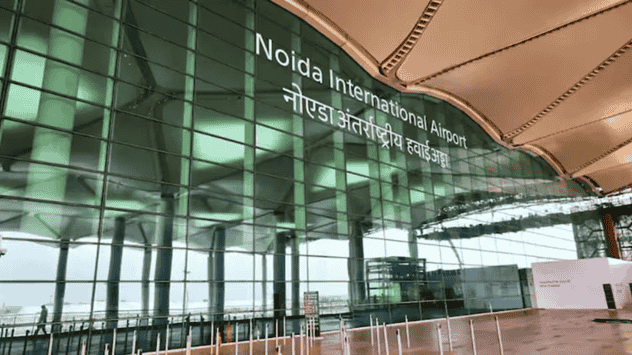


As Noida International Airport at Jewar begins commercial operations, many passengers are curious about the two codes associated with the airport — DXN and VIND. Here’s what these codes mean, who assigns them, and why both are important to global aviation.
The Noida International Airport at Jewar in Uttar Pradesh, India’s newest commercial airport, carries the three-letter code DXN. While most airport codes are straightforward abbreviations of city names, the code assigned to the airport has a distinct meaning linked to its location and ambitions.
The airport entered commercial operations on June 15, 2026, when an IndiGo flight from Lucknow’s Chaudhary Charan Singh International Airport became the first aircraft to land at the facility. The new airport is expected to ease passenger traffic at Delhi’s Indira Gandhi International Airport and strengthen connectivity across western Uttar Pradesh and the National Capital Region (NCR).
What does DXN mean?
The code DXN was allotted to Noida International Airport by the International Air Transport Association (IATA) in 2023.
According to Christoph Schnellmann, the airport’s former chief executive officer, the letters were chosen to reflect both the airport’s geography and its broader role.
“The D in DXN signifies Delhi, which is the national capital, and N stands for Noida, which shows our presence in the Western UP area. X, we think, signifies connectivity within India and the world,” Schnellmann had said while announcing the code.
The three-letter code serves as the airport’s global identifier and is used by airlines, travel agencies and passengers. It appears on tickets, boarding passes, baggage tags and booking systems.