

Housing societies across Delhi-NCR go years without elections, or see the same faces return again and again. ‘Self-appointed people stop serving us and start serving themselves.’
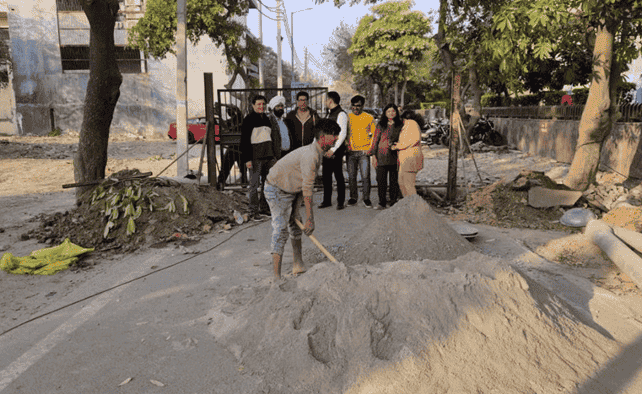
Noida: On 2 November, residents of Noida’s Sector 43 geared up for their first official RWA election. Until then, a self-appointed body had been operating unchallenged since 2013. But the process collapsed before a single vote could be cast. Instead of participating, the old faction staged a protest outside the Registrar’s office, forcing authorities to postpone the polls yet again.
“RWA presidency is another form of power in the society, and some people don’t want to lose that power or allow new leadership to come in,” said 40-year-old Deepak Sharma, part of the group of residents calling vociferously for the election.
RWAs are the first point of contact between residents and civic authorities, but this cog of urban governance keeps failing in Delhi-NCR. Many housing societies across the region go years without elections due to internal disputes, entrenched cabals, lack of urgency from authorities, and, sometimes, a shortage of volunteers. Some turn into mini-fiefdoms.
In Noida, the fallout of delayed elections and missing leadership is even worse than in Delhi since it lacks the capital’s multiple civic support systems. Unlike Delhi, which has the Municipal Corporation for sanitation and the PWD for civic maintenance, Noida residents rely almost entirely on a single body—the Noida Authority. This centralisation makes the RWA or AOA (Apartment Owners’ Association) a necessary bridge between citizens and authorities for security and civic issues, from garbage collection to street lighting.
“Our problems and complaints get buried in the Noida Authority’s pile of pending files. They have hundreds of sectors to handle, so unless our own leaders work internally, nothing will be solved,” said Chandni Mathur, a resident of Sector 43, home to properties worth crores, including independent houses, apartment buildings, and developments by Godrej.
Even in societies where elections technically occur, leadership frequently remains confined to a small circle. The same incumbents rotate through the positions of president, vice-president, secretary, and treasurer year after year. Certain legal loopholes allow this. RWAs are voluntary bodies registered under the Societies Registration Act of 1860 and state apartment or cooperative laws, which lay down rules for membership, elections, bylaws, and term durations. But there’s nothing preventing office-holders from simply running for different seats when elections come up every two to three years. In most cases, young and working residents do not actively participate in RWA elections or related matters and so there’s no real challenge either.